Gentle, non-irritating feel
A good Centella sunscreen should feel comfortable on sensitive skin without repeated burning, stinging, tightness or heat.
Best sign: you can apply it consistently without wanting to wash it off.

Centella sunscreen guide
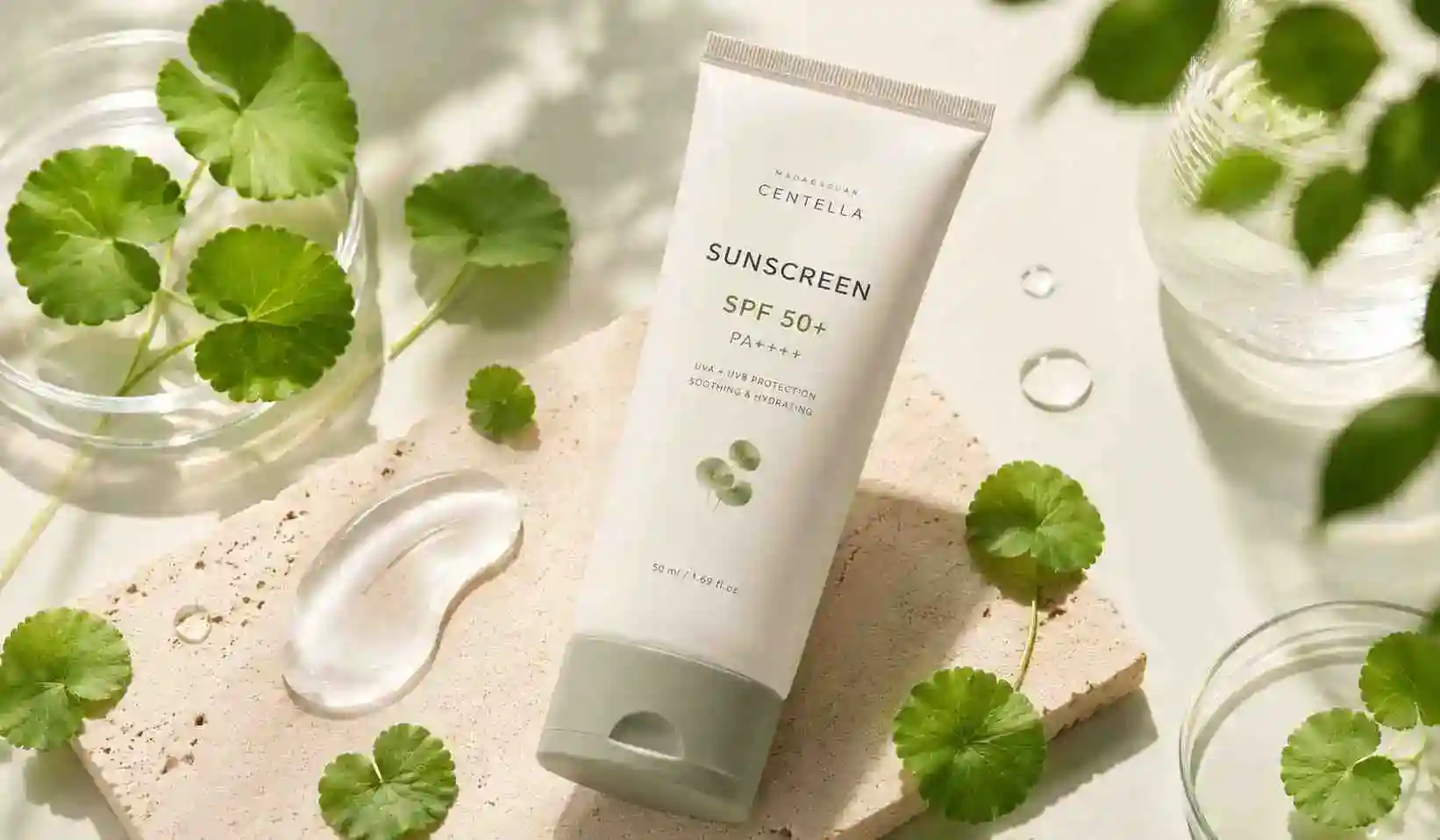
Choosing the right sunscreen can make a major difference when your skin is sensitive, reactive, acne-prone or easily irritated. A good Centella sunscreen should protect against UV exposure while fitting comfortably into a gentle skincare routine.
Why it matters
Sunscreen is one of the most important daily skincare steps, but not every formula works well for sensitive skin. Some sunscreens feel greasy, sting around the eyes, leave a heavy residue or become uncomfortable when layered with moisturizers and serums.
Centella Asiatica, also known as cica, is widely used in K-beauty products designed for sensitive-looking, redness-prone or irritated skin. When paired with a comfortable SPF formula, it can help create a routine that feels calmer, lighter and easier to use every morning.
This guide explains what makes a good Centella-friendly sunscreen, how to choose one based on your skin type, and what to look for before buying. If you are still deciding whether SPF belongs in your daily routine, read why a Centella sunscreen can be useful every morning.
Quick answer
The best Centella sunscreen is the one you can use every morning without discomfort. For sensitive skin, the winning formula usually comes down to three things: comfort, protection and texture.
A good Centella sunscreen should feel comfortable on sensitive skin without repeated burning, stinging, tightness or heat.
Sunscreen still has one main job: daily UV protection. Choose a formula that is easy enough to apply and reapply when needed.
The texture should work with serum, moisturizer and makeup if you use it. Heavy or sticky sunscreen is easier to skip.
How we choose
A good Centella sunscreen should not only look good on paper. We evaluate how well it fits sensitive-skin routines, how comfortable it feels, and whether it can be used consistently as the final morning skincare step.
We look for formulas that make sense for sensitive-skin routines, with calming, hydrating or barrier-supporting ingredients.
Sunscreen must first do its main job: provide reliable sun protection and be easy enough to apply every day.
We prefer formulas that feel comfortable on skin that tends to feel dry, tight, redness-prone or easily irritated.
A sunscreen should spread easily, absorb comfortably and avoid a sticky, greasy or heavy finish that discourages daily use.
If the skin barrier feels weakened, sunscreen should fit into a gentle routine with moisturizer, panthenol, ceramides or Centella support.
We look at whether the sunscreen layers well after serum and moisturizer without pilling, heaviness or discomfort.
We prioritize sunscreens that are realistic for daily use. A formula can have excellent ingredients, but if it feels uncomfortable, heavy or irritating, it is less useful for sensitive-skin routines.
Product direction
The best Centella sunscreen depends on what your skin needs most: hydration, a calmer-feeling routine, or more barrier support before daily UV protection.
A strong direction if you want daily UV protection with a lighter, more hydrating feel. This type of formula can suit skin that feels tight or easily dehydrated.
Best for: dry, tight or redness-prone sensitive skin.
Texture to prefer: lightweight cream, gel-cream or essence-like SPF.
Use with: a gentle cleanser and a simple Centella serum.
A good direction if your skin often looks red, irritated or easily overwhelmed. Cica-style sunscreens usually fit well into gentle, low-conflict routines.
Best for: reactive, redness-prone or acne-prone sensitive skin.
Texture to prefer: non-greasy, calming and easy to layer.
Use with: Centella, panthenol or a simple barrier-support serum.
If your skin feels dry, tight or compromised, sunscreen alone may not be enough. A barrier-supporting moisturizer underneath can make SPF more comfortable.
Best for: weakened, dry or barrier-damaged skin.
Texture to prefer: comfortable SPF that does not sting or pill.
Use with: ceramides, panthenol or a calming moisturizer.
Skin type guide
The best Centella sunscreen depends on how your skin reacts during the day: stinging, oiliness, dryness, tightness or barrier discomfort can all point you toward a different SPF texture.
Choose a sunscreen that feels gentle from the first few applications. If it repeatedly stings, burns or makes your skin feel hot, it may not be the right fit.
Choose: gentle, non-stinging SPF with calming or hydrating support.
Avoid: formulas that repeatedly burn, feel hot or make redness worse.
Best next step: keep the rest of your routine simple while testing.
Acne-prone sensitive skin usually needs a lightweight sunscreen that does not feel greasy or overly occlusive. Avoid changing too many products while testing a new SPF.
Choose: lightweight, non-greasy textures that layer cleanly.
Avoid: heavy finishes that make you want to skip sunscreen.
Best next step: test one new sunscreen at a time.
If your skin feels dry before sunscreen, apply moisturizer first. A hydrating SPF can help, but it should not always replace a proper moisturizer when your barrier needs support.
Choose: hydrating SPF with hyaluronic acid, panthenol or glycerin.
Avoid: relying on sunscreen alone if your skin already feels tight.
Best next step: apply moisturizer before SPF when needed.
When your skin barrier is compromised, keep the routine gentle. Focus on a mild cleanser, calming serum, barrier cream and sunscreen rather than strong exfoliants or multiple actives.
Choose: comfortable SPF layered over barrier-supporting skincare.
Avoid: strong actives, over-exfoliation and complicated routines.
Best next step: pair SPF with ceramides, panthenol or Centella.
Buying guide
A good Centella sunscreen should do more than protect against UV exposure. It should feel comfortable, layer well with your routine and support sensitive skin without making it feel heavier or more reactive.
Sensitive skin often does better with formulas that avoid harsh positioning and focus on comfort, hydration and barrier support.
Look for: Centella, cica, madecassoside, panthenol, hyaluronic acid or green tea.
Avoid: formulas that repeatedly sting, burn or leave your skin feeling hot.
Sunscreen should first do its main job: help protect your skin from UV exposure when used correctly and consistently.
Look for: daily SPF that is easy to apply and comfortable enough to wear regularly.
Why it matters: consistent protection is especially useful for redness-prone or post-breakout skin.
If your skin barrier feels weak, sunscreen alone is not always enough. Your morning routine should still support comfort and resilience.
Look for: Centella serum, panthenol, ceramides or a barrier-supporting moisturizer underneath.
Avoid: stacking too many strong actives before sunscreen.
Hydration helps sunscreen feel more comfortable during the day, especially if your skin gets tight, dry or easily irritated.
Look for: hyaluronic acid, glycerin, panthenol, aloe vera or lightweight moisturizing support.
Remember: very dry skin may still need a separate moisturizer underneath.
The best sunscreen is one you will apply every morning. A heavy, sticky or greasy finish often makes daily use harder.
Look for: lightweight, easy-spreading textures that absorb comfortably.
Avoid: formulas that pill badly, feel sticky or make you want to skip SPF.
Sunscreen should work with your serum, moisturizer and makeup if you use it. If it pills or feels heavy, simplify your routine first.
Look for: a formula that layers well after moisturizer.
Tip: test one new sunscreen at a time so you know how your skin reacts.
Routine map
A Centella sunscreen works best when it fits into a simple morning routine: cleanse gently, add calming support if needed, moisturize when your skin feels tight, then finish with sunscreen before going outside.
Use a mild cleanser, or simply rinse if your skin feels dry or easily stripped in the morning.
Apply a lightweight Centella serum, toner or ampoule if your skin is redness-prone, reactive or acne-prone.
Add moisturizer when your skin feels tight, dry or barrier-compromised before applying SPF.
Apply sunscreen as the final skincare step before makeup or going outside.
Common mistakes
The right sunscreen should protect your skin without making your routine feel heavier, hotter or more irritating. These are the most common mistakes to avoid when choosing an SPF for sensitive or reactive skin.
SPF matters, but comfort matters too. If a sunscreen feels unpleasant, you are less likely to apply it consistently.
Choose SPF protection plus a texture your skin can tolerate every morning.
Some mild tingling can happen when the barrier is compromised, but repeated burning or discomfort is a sign that the formula may not suit your skin.
Stop using formulas that repeatedly burn, sting or make your skin feel hot.
If your skin is dry or barrier-damaged, sunscreen may not be enough by itself. A moisturizer first can help keep the routine more comfortable.
Use a barrier-supporting moisturizer before SPF when your skin feels tight or weak.
When trying a new sunscreen, keep the rest of your routine stable. This makes it easier to understand how your skin reacts.
Introduce one new sunscreen at a time and keep your routine simple while testing it.
Product selection
This guide helps you understand what to look for. Your next step depends on whether you want product recommendations or help choosing the right format for your skin concern.
FAQ
A few practical answers before choosing or adding a Centella sunscreen to your sensitive-skin routine.
A Centella-friendly sunscreen can be a good option for sensitive-skin routines, especially when the formula is comfortable and works well with your moisturizer.
Yes. You can use a Centella serum or ampoule before moisturizer and sunscreen in your morning routine.
Yes, but texture matters. Acne-prone sensitive skin often prefers lightweight, comfortable sunscreens that do not feel greasy or heavy.
If your skin feels dry, tight or barrier-damaged, use moisturizer before sunscreen. If your sunscreen is moisturizing enough, some people may not need a separate cream.
Stop using that formula and simplify your routine. Focus on a gentle cleanser, moisturizer and a more comfortable SPF option.